What is a Garden? Part 2.
Welcome back.
In contrast, many humans live in flats with no outdoor space and nurture a brood of houseplants. Because they cannot enter gardens, nature comes to them. They lack outdoor space, but do they have a garden if their plants bring joy?
Thus far, we agree gardens offer privacy, controlled planting and links to the soul, though no plants might pass as controlled planting.
While we see spiritual issues, are moral aspects important? In the past, gardens were built to show off wealth and power. Stowe House and Chatsworth join Versailles and Hampton Court Palace as well-known examples. Before this, rich Romans built peristyle gardens to flaunt their status.
Even the lawn, the mainstay of most English gardens, began life as an open show of riches. For lawns, read pieces of ground with low yields. Look on them as ecological deserts. Many creatures feel vulnerable to predators crossing close-shaved grass and avoid the unsafe open space. Before lawn mowers, farm workers scythed them every week. This stopped noble lords and ladies treading in sheep droppings left by nature’s grass cutters and shouted, “I am rich and famous!”
Yet, despite their poor wildlife value and past use as a display of wealth, people today want a lawn front and centre in their garden.
Rich owners did not like dirt under their nails. So, they paid to have others build dazzling spaces to show their status. They were no gardeners, just show-offs.
Perhaps we need two words for gardens. First, to ascribe those built by the owner’s efforts for their sole pleasure. Then, for gardens built to display wealth and power. Gardens are made, not bought, to earn the title ‘ garden.’ Therefore, I prefer gardens with no show of power. Alfred Austin, English Poet Laureate in 1894, wrote that gardening requires “hands in the dirt.”
He was unaware of modern research showing mere contact between skin and soil releases serotonin, which repairs the immune system while making humans feel happier. A bacterium present in soil acts as a catalyst. These nice microbes enter your bloodstream via grazes while you dig. (International Journal of Environmental Research and Public Health, January 15th, 2020)
Next, having agreed what gardens look like, let us explore what happens in them. Does this affect our definition? People suggest space to relax and play or getting close to nature as the aim of a garden. Contents and style support what happens and inspire calm.
But are spaces with swings or goalposts, gardens or play areas? If they have grass, perhaps both. Is fitful grass mowing “proper” gardening?
Humans value a competitive spirit in sport and work. However, in the garden, it wrecks joy. Just like those few rich garden owners in medieval times, a few modern humans find pleasure in thinking their garden better than next door’s. If someone else’s garden appears better, they lose that joy. Why?
I see no good or bad gardens, just gardens. Some differ from others, but different is just different. Not better, not worse.
Some insist a garden must look tidy and show control, but I never conflate tidiness with beauty in gardens. Sterile, not tidy is the opposite of untidy. Mowing lawn stripes or sweeping leaves is gardening in the sense; mopping floors or dusting are high-class interior design.
Nurturing plants leads to joy, not making spaces tidy. When experts call their gardens the room outside, they do not equate gardening with housework.
If we wish gardens to prompt happy feelings in their makers, things we dislike may deserve the title “Garden,” because they please someone else.
For example, some gardeners remove weeds on sight, and others refuse to say ʻ weed. ʼ They replace the term with ʻ native plant. ʼ There must be common ground between the extremes of removing weeds and caring for wild species.
So, tolerance is implicit in our definition of a garden. It involves accepting practices which differ from our own, perhaps allowing ʻ weeds. ` After all, a garden needs only please its curator.
We need a tenet that trumps all others to untangle these strands. Could the owner’s feelings define their garden? If they name it garden, it is a garden. They connect to their plot because they work it. That plain plant next to my rose came from Granny’s garden. No one else knows that or feels the bond.
So, to earn the title of garden, a space must prompt positive emotions in its creator.
But others may say, “I would not call that a garden.” Should negative feelings from outsiders prevent us from calling someone’s much-loved space a garden?
For example, contrast views on grass and moss in Britain and Japan. In Japan’s parks, workers spend their day picking stray grass seedlings from swathes of moss. For them, moss and no grass create beauty.
Yet in Britain, gardeners spend fortunes to buy products to kill moss on their lawns. Here, grass with no moss gives joy. Style is personal. In both places, they call their choice between grass and moss a garden. Monty showed this in his series on Japanese gardens.
Therefore, I resist writing, ʻ In conclusion. ʼ I fear no answer to the question, ʻ What is a garden? ʼ able to satisfy all, exists.
We have established answers should refer to privacy, nurture, nature, structure, soul, optimism, and most of all, the pleasure it affords. How a garden looks is irrelevant for our purposes.
Indeed, it need only please one person. A Chinese proverb states, “If you would be happy all your life, plant a garden.” It was tempting to quote Alfred Austin’s words, “To nurture a garden is to feed not just the body, but the soul.”
So, I now offer my definition of the word garden.
“A garden is a space that gives and receives love, respects nature, and brings its curator constant joy.”
It avoids weasel words to reach a compromise between conflicting views and encompasses a range of opinions.
The word curator implies the owner cares for the garden, treating it with respect, while constant links to optimism. It caters for Zen’s absence of plants and prefers emotions over design. The curator part suggests that you cannot leave nature to get on with it.
If botanists reclassify plants nonstop, humans can refine answers to the question; “What is a garden?” when they wish. At least I thought my version through, though I may change it next week. My words are, however, one answer in the vast sea of “What is a garden?” responses.
So, where do you stand? Is your garden a playground, a private refuge, support for nature, a space for faith, or a mental health balm? Must it please you or impress the neighbours? Are you ready to effect slight changes to make your garden more mindful?
I cannot wait to read any suggestions you have.
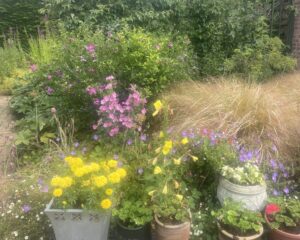

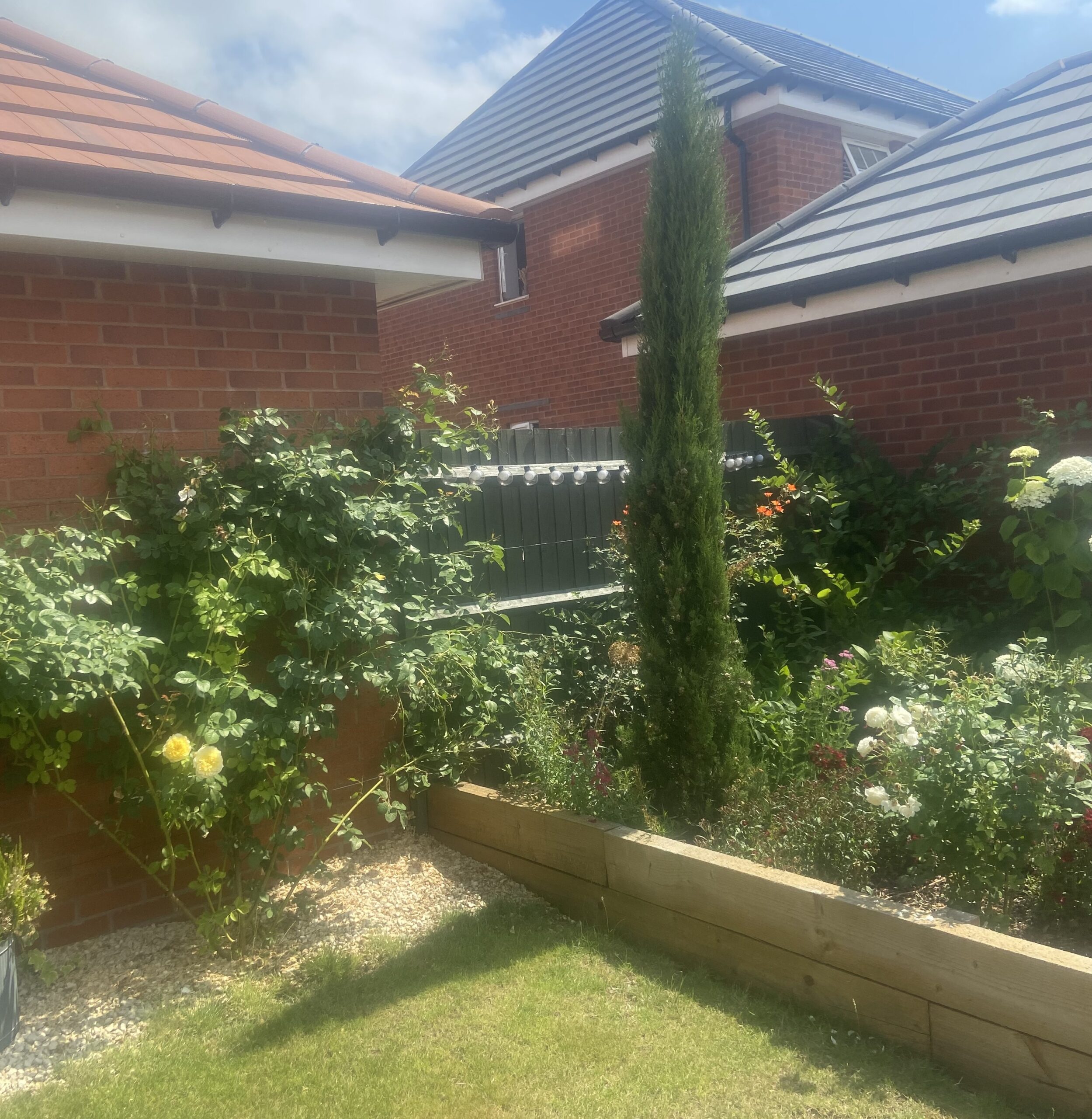
Front garden still offers interest Roses still full on Figs gave a great crop