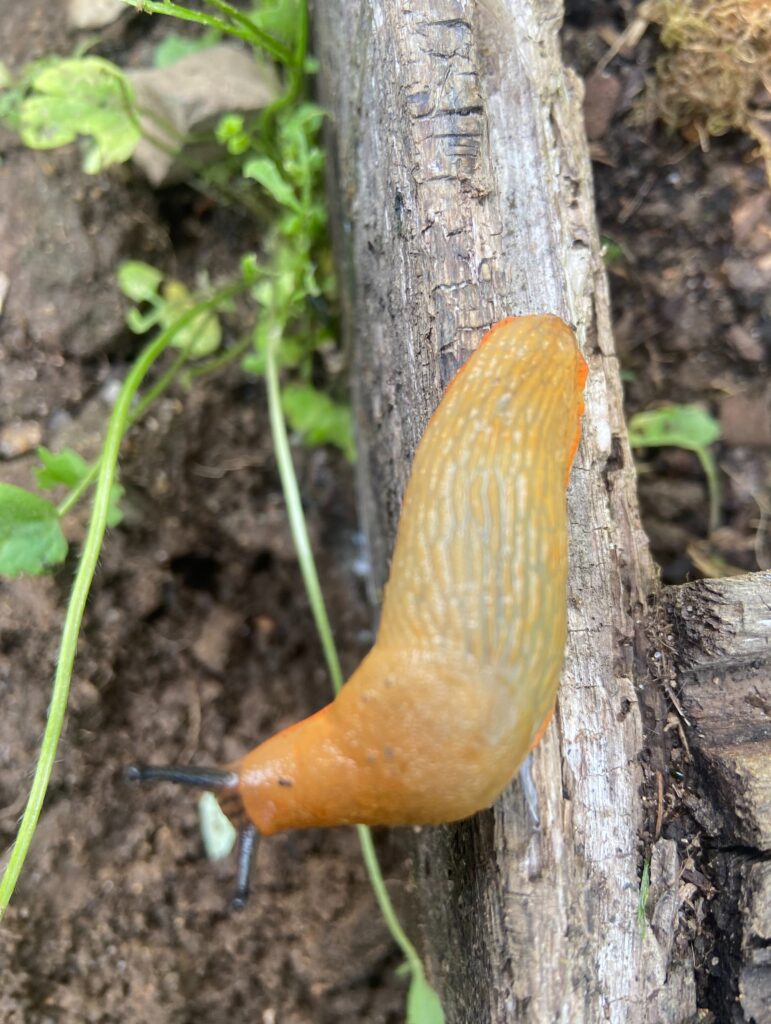
The Enigma of Slugs and Snails.
Today I act as defence counsel for the most hated garden creatures.
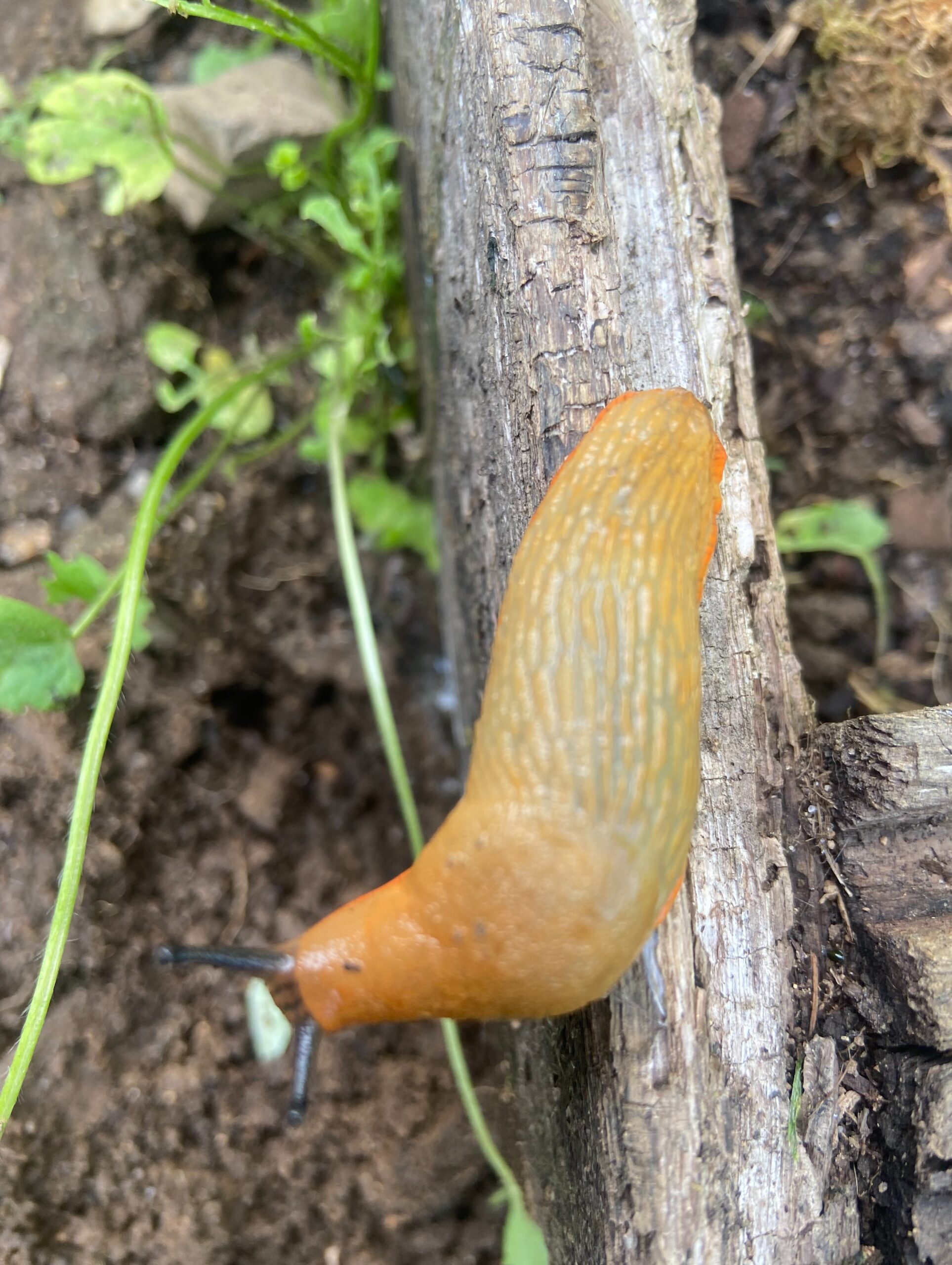
Though it is probably not needed, let’s check out the slime brigade’s crime sheet. Slugs and snails eat seedlings. These never grow into mature lettuce, peas, cosmos, etc. They insert gashes and holes in the leaves of prized plants, making them ugly or inedible.
Birds have beaks and legs to hurt your plants, but the slug’s weapon of choice is its teeth. Depending on the species, slugs have up to 27,000 teeth. Snails, however, inflict their carnage with a mere 14,000. They seem to calculate the value of all the plants in your garden and start with the most expensive.
Slugs can eat up to forty times their own weight in food each day in perfect conditions. And more lurk in your plot than you know. At any moment, 95% are hiding below ground.
They go to great effort to ruin plants. It took no time for snails to climb eight feet up to my roof garden days after I made it.
They are endowed with great cunning and wait until humans sleep to venture out on their rampages. Snails have shells to keep predators out. They also have a fantastic sense of homing. Therefore, throwing snails over the fence serves no purpose, as they return.
In wet years, their numbers make gardeners feel overwhelmed. They can breed fast. Slugs have both male and female sexual parts, and when they mate, both get pregnant and lay 50 eggs each. They can reproduce all year round, but peak periods are spring and autumn.
Therefore, gardeners are not interested in good points our slimy pests may have, because all they see is the damage.
But mindful gardeners learn their garden must contain slugs. Poison slugs, and you poison or starve hedgehogs, frogs, blackbirds, and thrushes. Slug numbers grow faster with no predators. No yin, no yang.
So how can you protect plants without slug poison? Gardeners grow lettuce in pots to plant when too big for slugs to eat more than the outside leaves. Copper rings deter slugs by giving electric shocks. Other barriers such as sheep’s wool, eggshells, human hair, or coffee grounds stop working when wet.
Countless humans claim beer traps save plants from slugs. This hack uses a dish or cup filled with beer sunk so its rim sits level with the soil surface. When slugs smell alcohol, they move towards the beer, get drunk, and drown.
What lightweights. One sip and they are done. Such a happy death. Yet, the law of “I didn’t consider that” takes charge. Slugs die in the traps but munch on plants they pass, crawling to their demise. This increases damage as they trudge towards their drink of doom.
Insects that eat slugs also drown. Finally, it appears the yeast attracts slugs, not alcohol. Learn to live with slugs and stop believing something is right because it sounds true. Last, never waste good beer. Save it for beer batter to make tapas dishes from produce from your veg patch. Switching one poison for another fails so stop using poison.
Now, understand nature to work with it. Nature lays no beer traps for slugs, but gave you hedgehogs, thrushes, frogs, toads, ground beetles, slow worms, ducks and nematodes to reduce their numbers. It has more ruses for other issues.
Just like ants and wasps, slugs do not exist to spoil your garden. They are an essential part of it. Many slug species do not consume living plants. Instead, they recycle dead organic matter by eating it and improve soil health.
Hedgehogs, thrushes, slow-worms and ground beetles eat slugs. They are not calling for the extermination of slugs, as they would go hungry.
If you struggle to believe my view that we should accept slugs as part of gardening, then go to the RHS. It no longer classifies slugs and snails as pests. Why? For reasons I set out above. These creatures do not wreck your garden; they come with it.
If slugs ate all your garden plants, they would starve. So, they don’t. Organic gardeners all over the country manage productive vegetable plots and beautiful flower beds with their slug population held in check by a balance of nature. You may be one.